
Guide
iPhone or Android: which suits you better?
Both systems are mature – the choice depends on your devices, your budget and your preferences. Here are the key differences at a glance.
Updated 7 min readEditorial team wohandy.de
The basic idea: one manufacturer or many
The iPhone is made only by Apple. Hardware and software come from a single source, so the user experience and update support are consistent. Android, by contrast, is an open system used by many manufacturers – Samsung, Google, Xiaomi, Motorola, Oppo, Nothing and many more. As a result, Android smartphones are available in every price range, size and form factor, from rugged outdoor phones to foldables.
This fundamental difference runs through all the other points: with an iPhone, you get less choice but a very coherent overall package. With Android, you have maximum choice but need to look more closely at how well and for how long each manufacturer supports its devices.
Ease of use and customisation
iOS is considered especially beginner-friendly and tidy. Settings, gestures and apps behave the same on all iPhones. With recent versions, Apple has allowed more freedom in designing the home screen but remains more restrained overall.
Android can be customised far more: alternative home screens (launchers), your own default apps for browser, texts or keyboard, and widgets in many forms. Each manufacturer also puts its own interface on top of Android – One UI on Samsung, HyperOS on Xiaomi, a very lean version on Google Pixel. This brings variety but also means menus look different from device to device.
Price and choice
New iPhones start at upper mid-range prices; the cheapest option is the current e model or an older model in Apple’s line-up. If you want to spend less, go for a refurbished iPhone – these are in high demand thanks to their long updates and stable value.
With Android, you can find decent new devices from the low hundreds of euros, a very strong mid-range and flagships that match the iPhone Pro in price. Android devices usually lose value faster. That is annoying when reselling but an advantage if you want to buy last year’s model cheaply.
iPhones in our price comparison
Ad All products linked with "View offer" are commission (affiliate) links: if you buy through them, we earn a commission – the price stays the same for you. As an Amazon Associate and eBay Partner Network affiliate we earn from qualifying purchases. Learn more
 Ad
Ad Ad
Ad Ad
Ad Ad
AdUpdates and security
Apple rolls out iOS updates to all supported iPhones at the same time, and support has in practice lasted many years. On Android, the big manufacturers have caught up considerably: Google states seven years of updates for Pixels from the Pixel 8, and Samsung up to seven years for current Galaxy S models. With cheap devices and smaller manufacturers, the periods are often shorter – it pays to look closely here. Since June 2025, the EU Ecodesign Regulation has required at least five years of updates after the end of sales for newly launched models from all manufacturers.
Both systems now offer extensive privacy settings, for example for location sharing and camera and microphone access. On both systems, you usually install apps from an official store; on Android, installing from other sources is easier, which means more freedom but also more responsibility.
Camera, performance and battery
When it comes to the camera, current iPhones and the flagship models from Samsung, Google and Xiaomi deliver very good results; the differences lie more in image style than in quality. iPhones are considered particularly strong at video recording. Android flagships often offer more powerful zoom lenses and more manual settings. In the mid-range, the differences are bigger – here it pays to look at sensor size and optical image stabilisation.
In terms of performance, current iPhones and Android flagships are more than fast enough for all everyday tasks. You will mainly notice differences in demanding games and in how well a device still runs after a few years. Battery life depends heavily on the model: large Android devices with 5,000 mAh or more often last a very long time, and the iPhone Plus and Pro Max models also have plenty of stamina. The EU energy label helps you compare battery life directly.
The ecosystem often decides
If you already have a Mac, an iPad, an Apple Watch or AirPods, the iPhone plays to its strengths: AirDrop, a shared clipboard, calls on the Mac and seamless syncing via iCloud. An Apple Watch also only works with an iPhone.
If you use a Windows PC, an Android tablet or a smartwatch from Samsung, Garmin or Google, Android is often a better fit. Samsung offers its own ecosystem for its devices, with tablets, Galaxy Buds and Galaxy Watch. Google services such as Gmail, Maps, Photos and Drive run on both systems but are more deeply integrated on Android.
Popular Android alternative: Samsung Galaxy S
Ad All products linked with "View offer" are commission (affiliate) links: if you buy through them, we earn a commission – the price stays the same for you. As an Amazon Associate and eBay Partner Network affiliate we earn from qualifying purchases. Learn more
 Ad
Ad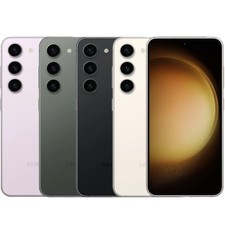 Ad
Ad Ad
Ad Ad
AdResale and repair
iPhones hold their value exceptionally well. If you sell your smartphone every two to three years, you usually get a larger share of the purchase price back with an iPhone. Android devices lose value faster – but used and previous-year models are correspondingly cheap.
Both sides have stepped up on repairs: Apple and Samsung offer self-service repair programmes with genuine parts, and the EU Ecodesign Regulation requires manufacturers to keep spare parts available for many years for newly launched models. The repairability class on the energy label shows at a glance how easy a device is to repair.
Family, children and device mix
Your family plays a role too. If everyone in the household uses an iPhone, shared photo albums, Family Sharing for purchases and parental controls via Screen Time are easy to manage centrally. On Android, Google Family Link handles similar tasks, such as approving apps and setting usage time for children. Mixed families get on well with cross-platform services such as WhatsApp, Google Photos or messaging groups. For children and teenagers, Android is often the cheaper choice because there are solid entry-level devices, while an older refurbished iPhone can be an affordable alternative.
For children, also think about durability and storage: a sturdy case and a screen protector noticeably extend the device’s life, and sufficient storage prevents games and photos from filling it up after a short time. A model with a long update commitment can later be handed down within the family.
Switching: how to make the move
Switching systems is easier today than it used to be. With the “Move to iOS” app, Apple offers a migration assistant from Android to iPhone, and Google and Samsung have their own tools for moving from iPhone to Android. Contacts, photos, calendars and many settings can be transferred this way. You can now also take your WhatsApp chats with you between the systems.
What does not come along is purchased apps: they are only valid in the respective store. Subscriptions such as music or video streaming, on the other hand, usually continue across platforms, unless you took them out directly via the App Store.
- iPhone suits you if: you use Apple devices, want simple operation and care about resale value
- Android suits you if: you want maximum choice, customisation or have a small budget
- Regardless of system: pay attention to the update commitment and storage
Conclusion: there is no wrong choice
The question “iPhone or Android?” has no universal answer. Both systems are mature, secure and offer suitable apps for every purpose. What matters are the devices you already own, your budget and how much you value customisation. If you are unsure, hold a friend’s smartphone for a few minutes – gut feeling about the user experience often decides faster than any spec sheet.
FAQ
Is an iPhone more secure than Android?
Both systems are well protected with current updates. What matters is that your device still receives security updates and that you install apps from trustworthy sources.
Do Android phones get updates as long as iPhones?
With Google Pixel and current Samsung Galaxy S models, the commitments are now comparably long. With cheap devices and smaller manufacturers, they are often shorter.
Can I take my WhatsApp chats with me when switching?
Yes, WhatsApp supports transferring chats between iPhone and Android, usually while setting up the new device.
Does an Apple Watch work with Android?
No, the Apple Watch requires an iPhone. For Android, there are smartwatches from Samsung, Google or Garmin, for example.